How to Improve your Ability to Influence Outcomes

You don’t need a title to make a difference. Some of the most powerful people in any room aren’t the ones running the meeting — they’re the ones asking the right questions.
But here’s where most people go wrong: when they want to steer an outcome, they push. They advocate. They present their case. And sometimes that works. More often, it puts people on the defensive and shuts the conversation down before it even starts.

There’s a better way.

Let the Horse Find the Water
Think about it like this: you can lead a horse to water, but you can’t make it drink. The real skill? Making the horse think it found the stream itself.
When people arrive at a conclusion on their own, they own it. They champion it. Your job as an influencer isn’t to hand them the answer — it’s to ask the questions that get them there.

The Questions That Change Everything
Two of our favourites:
“What other options did we rule out?” This one is deceptively simple. It gently opens the door to possibilities that may have been dismissed too early, without making anyone feel like their thinking was wrong. It’s curious, not confrontational.
“If we had a magic wand, what would we really be asking for?” This question is magic in itself. It strips away constraints and gets to the heart of what people actually want — not just what they think is possible. Once you understand the real need, you can help shape a path toward it.

Why This Works
Asking smart questions does two things at once: it builds trust and it shifts thinking. When you ask instead of tell, you signal that you’re genuinely interested in the best outcome, not just your outcome. That changes the dynamic entirely. People feel heard. And more often than not, they land somewhere better than where they started.

Influence isn’t about being the loudest voice in the room. It’s about being the most curious one.

Ready to Go Deeper?
The right question at the right time can change everything — in a meeting, a project, a conversation. We’ve built a whole library of powerful questions designed to help you lead, align, and influence more effectively.
👉 Explore our question library on the Mindavation website and start influencing outcomes today.
Conflict isn’t a character flaw

We recently ran a Strength Deployment Inventory (SDI) session with a leadership team who thought they knew each other pretty well. Two hours in, one leader turned to a colleague and said, “So that’s why you go quiet in meetings when things get tense. I always read it as you not caring.”

She cared. A lot. She just showed it differently under pressure.

That single moment is the whole point of this work. Here are some of our most recent insights from our SDI workshops:

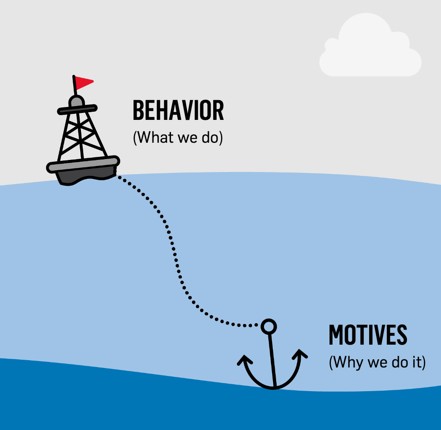
Motives are the anchor. Behaviours are the buoy.

Think of your motives like an anchor — fixed, steady, sitting on the seabed. It’s why you do what you do, and it barely shifts from your early twenties onward.

Your strengths and behaviours are the buoy on the surface. They drift and respond to the conditions around them. Two people can be tied to very different anchors and still show up with the same buoy on any given day, which is exactly why teams misread each other.

Even our best strengths can work against us

One of the ‘aha’ moments in an SDI session happens when we look at “overdone strengths” — the moment a strength gets used a little too hard for the room. Nobody sets out to overdo a strength. It’s usually well-intended, and it shows up when we’re already under pressure.

The fix isn’t to switch the strength off. It’s to notice it earlier, in yourself and others, and dial it up or down depending on who’s in front of you and what the moment calls for.

Conflict isn’t a character flaw – it’s a sequence

Here’s the SDI insight that changes how leaders handle friction in their teams: conflict behaviour runs in a predictable sequence, and almost nobody starts at their worst.

Stage one is the most productive place to resolve a disagreement, and most conflict never needs to leave it. Stage two is the “forget it, whatever” stage, where frustration starts to leak out. Stage three is self-preservation — hands thrown up, shutting down, or fighting mad. It’s rare, and it’s a sign someone feels genuinely threatened.

Once a team understands this conflict sequence, and can recognise where each other is at, the temperature can drop in a meeting and differences resolved.

The takeaway for leaders

This is about giving your teams a genuine appreciation for the ways they’re wired differently and a shared, non-judgemental language for why they sometimes clash. When teams can talk about conflict in one of Mindavation’s SDI sessions, they solve problems faster and trust each other more.

If you’re noticing recurring friction in your team, or a pattern of good people quietly misreading each other, it might be time for a conversation about what’s really driving the behaviour you’re seeing.

Mindavation has been helping teams build this kind of relationship intelligence since 1999. Get in touch to talk about running an SDI session with your team.

Contact us: [email protected]